

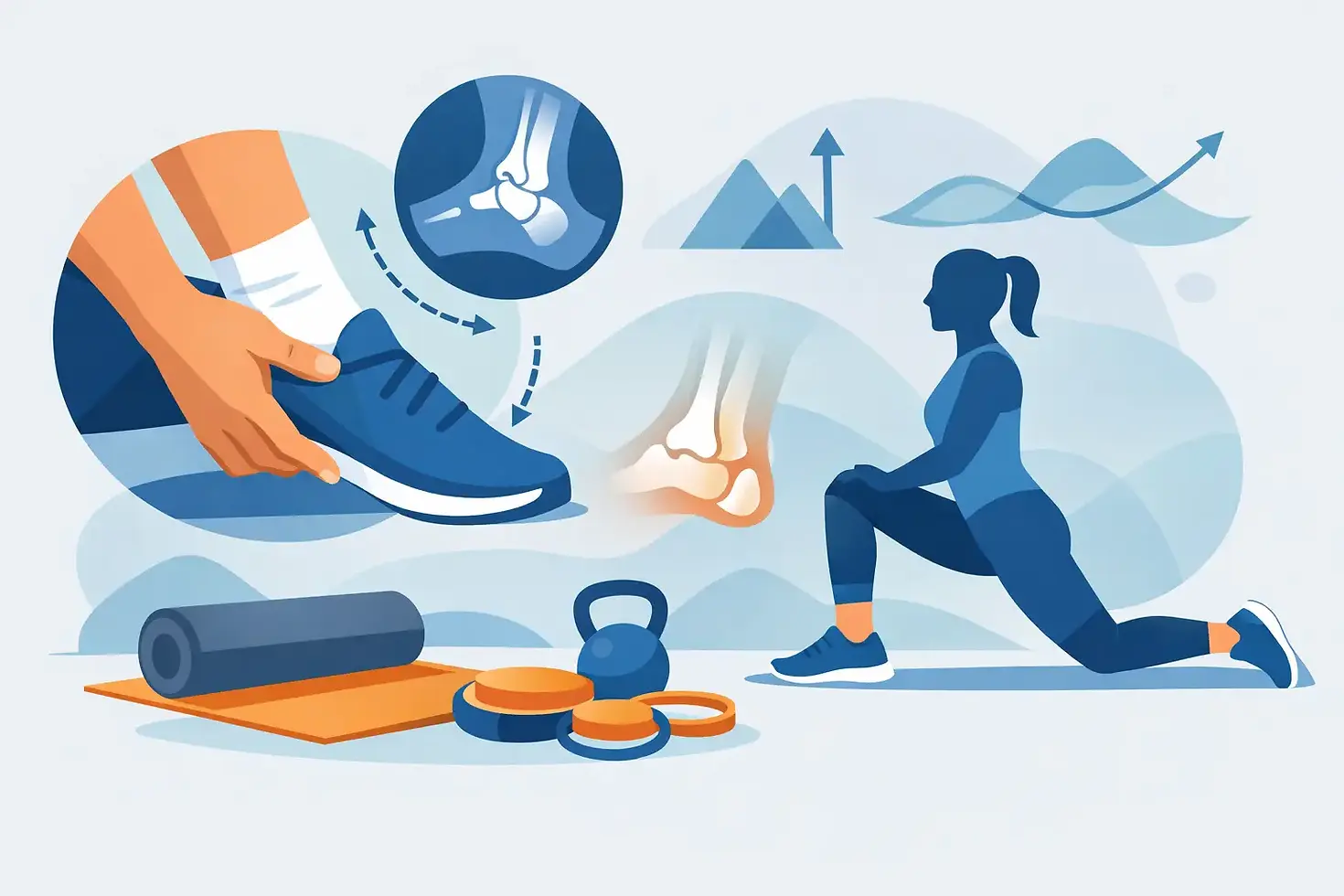
How to Improve Ankle Mobility for Easier Movement

A stiff ankle can show up far from your foot. It may feel like a squat that never reaches depth, a knee that aches after a hike, a golf swing that feels restricted, or a persistent pull through the calf after a long day on your feet. To improve ankle mobility, the goal is not to force more range. It is to help your ankle move comfortably, with the strength and control your body needs for real life.
Every body is unique. A runner returning from a sprain, a hospitality professional working long shifts, and a Wine Country visitor who has spent a weekend walking uneven terrain may all have limited ankle motion for different reasons. The right approach begins with understanding what your body is telling you.
Why ankle mobility affects so much more than your ankles
Ankle mobility usually refers to how well the ankle bends in several directions, especially dorsiflexion - the movement of your knee traveling forward over your foot while your heel stays grounded. You use that motion while walking downstairs, getting up from a chair, climbing a hill, lunging, squatting, and absorbing force when you run or jump.
When the ankle does not move well, the body often finds motion somewhere else. Your heel may lift early, your foot may turn outward, your arch may collapse, or your knee and hip may work harder to compensate. That does not mean a stiff ankle is the cause of every knee, hip, or back problem. It does mean it can be a meaningful part of the movement picture.
Restricted ankle motion is common after an ankle sprain, a period in a walking boot, tendon irritation, or simply months of sitting and wearing stiff shoes. Tight calves can contribute, but they are not always the whole story. Joint stiffness, foot mechanics, swelling, old injury patterns, and a lack of strength at the end of your available range can all matter.
A simple way to check your current range
Try a knee-to-wall check in bare feet or supportive athletic shoes. Face a wall, place one foot a few inches away, and gently drive that knee toward the wall without letting the heel rise or the arch collapse. If your knee reaches the wall easily, move the foot back slightly and repeat.
Notice more than the distance. Does one side feel pinchy at the front of the ankle? Does the heel want to lift? Does your knee drift inward? Is there a major side-to-side difference? These details can help guide your next step. The goal is not to chase a perfect number. It is to find a comfortable range that supports the activities you care about.
Sharp pain, substantial swelling, numbness, a feeling that the ankle is giving way, or an inability to bear weight deserves prompt medical evaluation. If you recently rolled your ankle, do not treat mobility work as a substitute for a proper assessment.
How to improve ankle mobility without forcing it
Consistency beats intensity. A few focused minutes most days usually works better than one aggressive stretch session each week. Start with gentle movement, then add strength and load gradually. If a drill produces sharp pain or worsens symptoms later that day or the next morning, reduce the range or stop and seek guidance.
Start by warming the area
Before stretching, take a short walk, pedal a stationary bike, or perform slow ankle circles. Warm tissue tends to move more comfortably, and your nervous system is less likely to guard against a range that feels abrupt or threatening.
From there, use controlled repetitions rather than bouncing. Think of each repetition as practice: your body is learning that it can access and control the motion safely.
Use four movements that build usable range
The following sequence works well for many active adults. Move slowly and keep discomfort mild. A gentle stretch or muscular effort is fine. Pinching, sharp pain, or instability is not.
Knee-to-wall mobilization: Stand facing a wall with your foot flat. Guide your knee forward toward the wall while keeping your heel down and your knee tracking roughly over the second or third toe. Perform 8 to 12 slow repetitions per side.
Bent-knee calf stretch: Place your hands on a wall and step one foot behind you. Bend both knees slightly while keeping the back heel grounded. This position targets the deeper calf muscle, which can influence the ankle motion needed for stairs and squats. Hold for 20 to 30 seconds, then repeat once or twice.
Straight-knee calf stretch: Use the same setup, but straighten the back knee while pressing the heel gently into the floor. Keep the stretch steady rather than forcing it. Hold for 20 to 30 seconds and repeat once or twice.
Supported heel raises: Hold a counter or wall, rise onto both feet, then lower with control. Begin with 8 to 15 repetitions. Strong calves help you use the range you gain, especially during walking, hiking, and court sports.
You do not need to do every drill forever. If your primary limitation is a tight calf, stretching may be a helpful emphasis. If the front of the ankle feels blocked after an old sprain, joint-focused mobility and individualized hands-on work may be more useful. If your ankle moves well but feels unstable, strength, balance, and movement retraining should take a larger role.
Make your new range carry over to daily life
Mobility improves when the body sees a reason to keep it. After your exercises, use the motion in a simple functional movement such as a controlled bodyweight squat, a split squat with the front heel grounded, or a step-down from a low stair. Keep the range small enough that your foot stays stable.
Your footwear and schedule matter, too. Boots or dress shoes with a raised heel can feel comfortable during long workdays, but relying on them all the time may reduce how often your ankle travels through its full range. You do not need to replace every shoe with a minimalist option. Instead, give your feet regular opportunities to move in supportive footwear, especially during exercise and walking.
Long periods of sitting can also leave the calves and ankles feeling locked up. A brief movement break between meetings, after a drive, or before your first walk of the day can make a bigger difference than waiting until stiffness becomes pain.
When stretching alone is not enough
If ankle stiffness has lingered for weeks, keeps returning, or limits an activity you value, a more personalized plan can save you from guessing. An experienced provider can assess how your ankle, calf, foot, knee, and hip work together, then adjust the plan around your lifestyle and goals.
Hands-on assisted stretching can be especially valuable when you struggle to access a comfortable range on your own or when tightness through the calves, hamstrings, hips, and surrounding tissues is affecting your movement. The benefit is not simply being pushed farther into a stretch. It is having the session tailored to your current tolerance, your movement pattern, and the result you want - whether that is a more comfortable round of golf, easier stairs, or a confident return to training.
For some people, chronic tendon pain or myofascial pain around the lower leg and ankle may need additional support. Non-invasive shockwave therapy can be considered as part of a clinician-guided recovery plan for appropriate conditions, but it is not a one-size-fits-all answer for ordinary stiffness. A thoughtful assessment should come first.
At WellStride Mobility, care is built around the way you move through life, not a generic flexibility target. That may mean assisted stretching to restore more comfortable motion, recovery support around demanding activity, or a plan that helps you maintain progress between sessions.
Give your ankles time to adapt
Some people feel a change after one focused session of mobility work, particularly when stiffness is tied to a long day of sitting or activity. Lasting improvement usually takes longer because your tissues, nervous system, and movement habits all need time to adapt. Aim for a short routine three to five days per week, and reassess how walking, squatting, stairs, or your chosen sport feels after two to four weeks.
The most useful ankle mobility is not the deepest stretch you can force. It is the comfortable, controlled range that lets you walk, train, work, travel, and enjoy Napa Valley with more confidence. Start where you are, pay attention to what changes, and give your body the individualized support it needs to keep moving well.


Comments