

How to Reduce Hip Flexor Tightness Safely

That pinching sensation at the front of your hip when you stand after a long drive, finish a cycling class, or step out of the car does not always mean you need a deeper stretch. To reduce hip flexor tightness effectively, you need to look at how your hips move, what your day asks of them, and whether nearby muscles are doing their share of the work.
Your hip flexors are a group of muscles that help lift your knee and bend at the hip. They work hard during walking, running, climbing stairs, cycling, kicking, and even getting up from a chair. When they feel tight, the answer may be gentle lengthening, better movement control, recovery support, or a combination of all three. Every body is unique, and the right approach should leave you feeling more open and capable, not sore and overstretched.
Why Hip Flexors Feel Tight
The phrase “tight hip flexors” is common, but the feeling can come from several sources. Long periods of sitting keep the hip in a flexed position for hours at a time. Over time, your body may become less comfortable moving into hip extension, such as when you walk with a longer stride, stand tall, or lunge.
Activity can also contribute. Runners, cyclists, golfers, hikers, and people who train hard in the gym repeatedly ask the hip flexors to stabilize and produce force. If recovery falls behind training volume, those muscles can begin to feel guarded, fatigued, or tender.
Sometimes the issue is not a hip flexor that is truly short. It may be a lack of strength or control in the glutes, core, or hips. When those areas are not contributing well, the front of the hip can take on extra work. Stretching may offer temporary relief, but the tightness returns because the underlying movement pattern has not changed.
Low back discomfort can also be part of the picture. If you feel tightness at the front of the hip along with aching in the low back, a strong pulling sensation in the groin, or pain that travels down the leg, it is worth getting an individualized assessment rather than pushing through a generic stretch routine.
How to Reduce Hip Flexor Tightness Without Forcing It
Start by changing positions more often. A single workout cannot always offset eight hours at a desk, in a tasting room, behind the wheel, or on a laptop. Brief movement breaks throughout the day can make a meaningful difference. Stand up, take a short walk, gently shift your hips back and forth, or climb a few stairs every 30 to 60 minutes when your schedule allows.
The goal is not to avoid sitting completely. It is to give your hips regular opportunities to move through different positions. A five-minute walk between meetings is often more useful than waiting until the end of the day and forcing an intense stretch on stiff muscles.
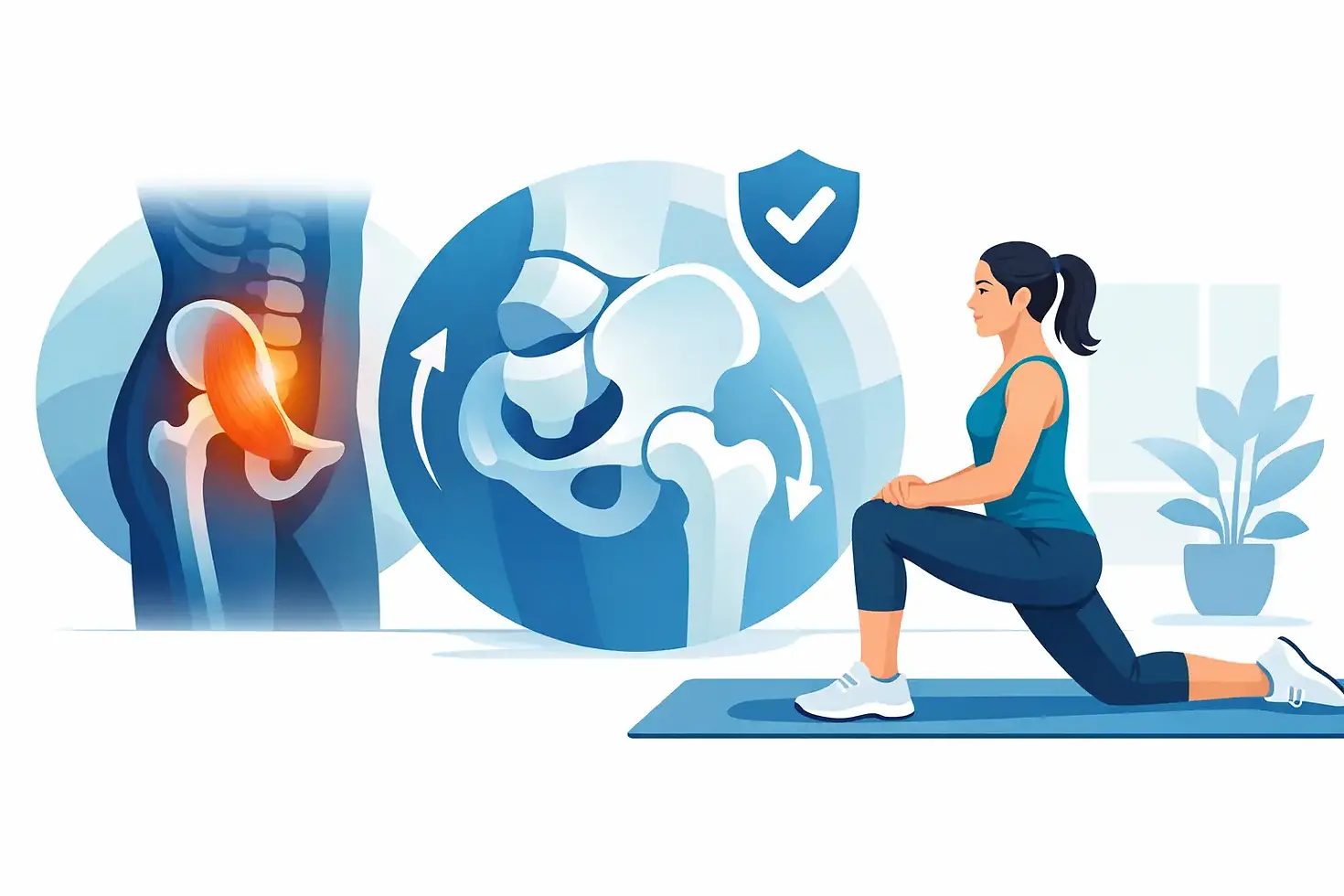
When you do stretch, use a position that keeps your low back from taking over. A half-kneeling hip flexor stretch is a helpful starting point. Place one knee on a padded surface and one foot in front of you. Gently tuck your pelvis by bringing your belt buckle slightly upward, then squeeze the glute on the kneeling side. Shift forward only a small amount until you feel a mild stretch at the front of that hip.
You should not feel a sharp pinch in the joint or a deep strain in your low back. Hold the position while breathing slowly for 20 to 30 seconds, then repeat on the other side. Two or three controlled rounds are plenty for most people. A bigger lunge does not automatically create a better result.
Add Movement After Stretching
Static stretching can feel good, but your hips also need to practice using their new range of motion. After a gentle hip flexor stretch, try a few slow bodyweight glute bridges. Keep your ribs relaxed, press through your feet, and squeeze your glutes as you lift. You can also practice a controlled split-stance weight shift, moving forward and back without collapsing into the front of the hip.
This pairing matters because it teaches your body that hip extension can be both available and supported. If stretching makes you feel looser for 10 minutes but the tightness returns as soon as you walk, adding strength and control may be the missing piece.
For active clients, the right dose depends on the sport. A cyclist may need more frequent movement breaks and glute-focused work after time in a flexed riding position. A runner may benefit from checking training load, stride mechanics, and recovery between hill sessions. A golfer may notice hip tightness after rotational demands and long periods of standing. The solution should fit your life, not force you into a one-size-fits-all routine.
Use Daily Habits That Support Easier Hip Movement
Your recovery habits influence how your hips feel from one day to the next. Hydration, sleep, and manageable training volume all affect how well muscles recover. A hard workout, a long shift on your feet, and poor sleep can create more tension than any one stretch can fix.
It also helps to vary how you stand and sit. If you always rest into one hip, cross the same leg, or carry a bag on one side, your body may repeatedly load the same areas. You do not need perfect posture all day. You need options. Change positions, alternate sides, and give your body regular movement rather than holding any posture for too long.
Before activity, choose dynamic mobility over long, aggressive holds. Controlled leg swings, walking lunges with a comfortable range, and easy hip circles can prepare the hips for movement. After activity, gentle stretching and breathing can help your nervous system settle. Think of mobility as an ongoing conversation with your body, not a punishment for having trained or sat too long.
When Assisted Stretching Can Help
If you have tried stretching on your own but cannot seem to find the right position, assisted stretching can provide a more precise approach. A trained provider can help stabilize your pelvis, guide the leg through a comfortable range, and adjust pressure based on what your body is telling you in the moment.
That individualized attention is especially useful when hip tightness is paired with low back stiffness, limited rotation, recurring discomfort during exercise, or a feeling that one side is always more restricted. The focus is not simply to push farther. It is to improve usable range of motion while helping the surrounding muscles relax and contribute more effectively.
At WellStride Mobility, assisted stretching sessions are tailored around your movement limitations, daily demands, and recovery goals. For some clients, that may mean preparing for a race, round of golf, or active Napa Valley weekend. For others, it means getting out of a chair, walking hills, or returning to workouts with less discomfort and more confidence.
Non-invasive recovery options may also be appropriate when persistent soft-tissue pain, tendinopathy, or myofascial sensitivity is part of the problem. A qualified provider can help determine whether focused mobility work, recovery therapy, strength support, or referral for medical evaluation best fits your situation.
Know When Tightness Needs More Than Stretching
Stop and seek professional medical guidance if hip discomfort follows a fall or sudden injury, causes significant weakness, includes numbness or tingling, or makes it difficult to bear weight. Persistent groin pain, night pain, swelling, fever, or symptoms that are steadily worsening also deserve prompt evaluation.
Even without red flags, recurring tightness that does not improve with reasonable movement, recovery, and load adjustments is worth addressing. Your hips are central to walking, working, training, and enjoying the activities that make life feel like yours. You should not have to keep planning around a body that feels restricted.
The most effective way forward is usually gentle, consistent, and personal: move often, stretch with intention, strengthen what supports your hips, and get hands-on guidance when your body needs more than guesswork. Small improvements in hip comfort can change the way you move through your entire day.


Comments